Driver fatigue is a serious risk that can have devastating consequences. At Grosvenor Leasing, we’re committed to helping fleet managers and drivers understand and mitigate the dangers of driving while tired. This comprehensive guide covers the risks, prevention strategies, warning signs, and actions to take if fatigue strikes while driving.

The Risks of Driving Tired
Driving tired can be as dangerous as drink-driving. Here are just some of the risks associated with fatigue:
- 10% – the number of road deaths and serious injuries on England’s motorways in the summer where fatigue is a factor. Source: National Highways
- £1,000 – the fine you might receive if you don’t tell the DVLA about a medical condition that could make you drowsy. Source: Brake
- 200 metres – the distance you could travel in six seconds at 70mph while having a ‘microsleep’ at the wheel. Source: GOV.UK
- Life imprisonment – the maximum sentence you could receive for causing death by dangerous driving. Source: Sentencing Council
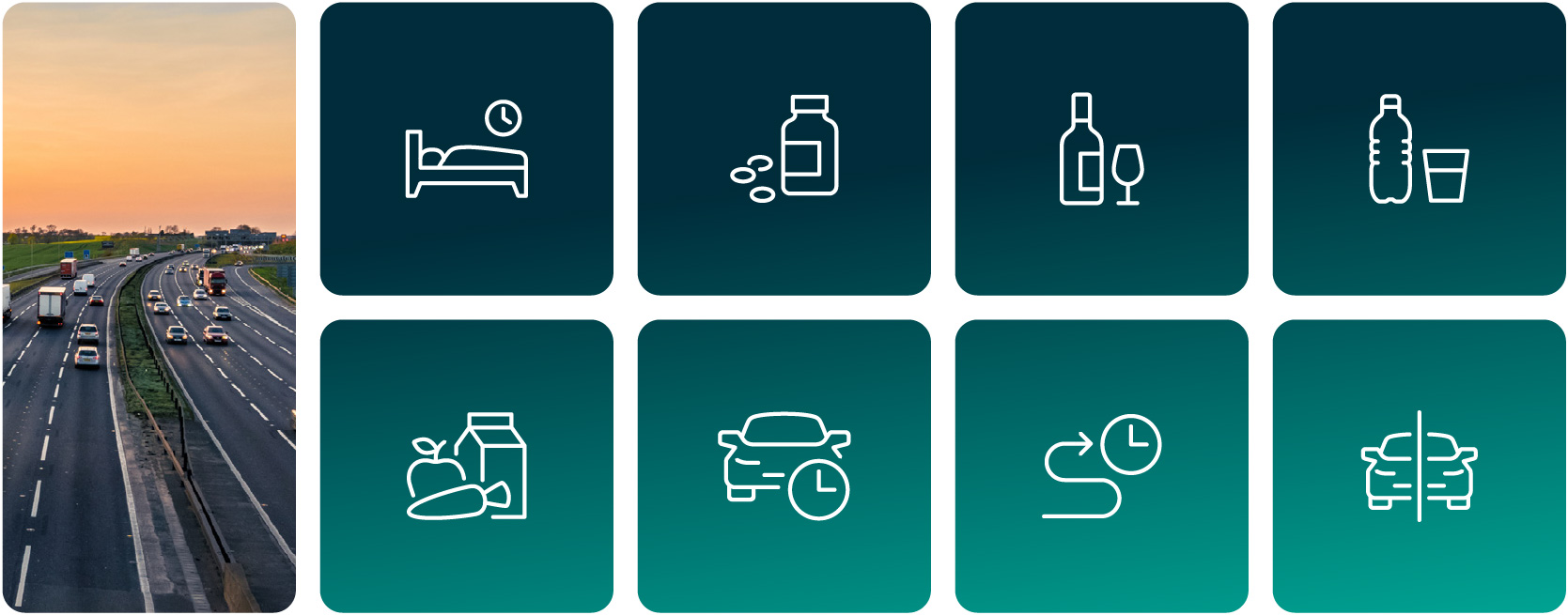
Reducing Risk: Eight Ways to Avoid Fatigue Before You Drive
1. Get enough sleep
Sleep needs can differ but, on average, adults need seven to nine hours sleep a night. To get a good night’s sleep, experts recommend getting up and going to bed at consistent times, regular exercise, avoiding TV and smartphones before bed, and making sure your bedroom is dark and quiet.
2. Check medication labels
Over-the-counter medicines, including some cold and flu tablets, as well as prescribed medication can cause drowsiness. If it’s listed as a possible side effect or there’s a warning on the label, obey it. Speak to your doctor or a pharmacist if you’re unsure.
3. Avoid alcohol
Even a small amount of alcohol, below the legal limit, can make you drowsy or disturb your sleep at night. Your company might also have a zero tolerance approach.
4. Keep hydrated
Dehydration can make you feel tired and affect concentration. You need six to eight cups of water (about 1.5 litres to 2 litres of water) per day – more if it’s hot weather or you’re exercising.
5. Eat right
Avoid a big meal (especially one high in fat) or a sugary snack which could cause your energy levels to spike and then crash.
6. Time your journey right
A long drive after a day’s work is a recipe for tiredness. There are also certain times of the day when you’re likely to be more drowsy. Ideally, you should avoid a long drive between midnight and 6am, and 2pm-4pm.
7. Plan your breaks
The Highway Code recommends a 15-minute break every two hours. It is important that you plan long journeys, allowing for rest breaks and identifying service stations en route.
8. Car share
Find out if a colleague needs to be at the same destination at the same time and travel together so you can share the driving.
Detection: Recognising the Warning Signs
Recognising the early signs of fatigue is crucial for staying safe on the road. If you notice any of these warning signals while driving, it’s important to take a break immediately:
- Frequent yawning and/or blinking
- Heavy eyelids
- Sore eyes
- Head nodding
- Struggling to concentrate
- Drifting out of your lane or hitting a rumble strip
- Slower reaction times
- Difficulty remembering the last few miles you’ve driven
- Missing road signs and exits
- Trouble maintaining a consistent speed
Can my car tell me if I’m too tired to drive?
Yes, if your car is fitted with a drowsiness detection system then you should get an alert if you’re showing signs of fatigue.
The system will typically use a camera, sensors and algorithms to monitor your behaviour behind the wheel.
You might get a symbol on the dashboard (often a coffee cup to indicate you need a break), a warning sound, or your steering wheel may vibrate.
But you shouldn’t rely on your car detecting you’re too tired to drive, pay attention to how you feel before your car warns you.
Action: What to Do If You’re Feeling Tired at the Wheel
If you experience any of the fatigue warning signs while driving or you get a drowsiness alert it’s time to pull over somewhere safe – preferably the nearest layby or service area. Then you can:
Power nap
Experts suggest pulling over for a power nap of 15 to 20 minutes can temporarily alleviate tiredness.
Drink caffeine
Having a coffee or an energy drink with caffeine in should take effect quickly. You’ll usually feel more alert within 15 to 45 minutes. However, like a power nap, this is just a quick fix and shouldn’t be relied on for a long journey.

Stay Safe on the Road
Driver fatigue is a serious issue that affects many fleet drivers. By understanding the risks, taking preventative measures, recognising the warning signs, and knowing what action to take, you can significantly reduce the dangers associated with driving while tired.
For more information about preventing driver fatigue or for advice on implementing a driver fatigue policy for your fleet, contact our expert team:
Phone: 0370 600 56 50
Email: info@ifmfleet.co.uk