As the days grow shorter and temperatures drop, driving conditions become increasingly challenging. At Grosvenor Leasing, we understand the importance of keeping you and your vehicle safe during the winter months. This comprehensive guide provides essential advice to help you navigate winter roads with confidence.
Why Winter Preparation Matters
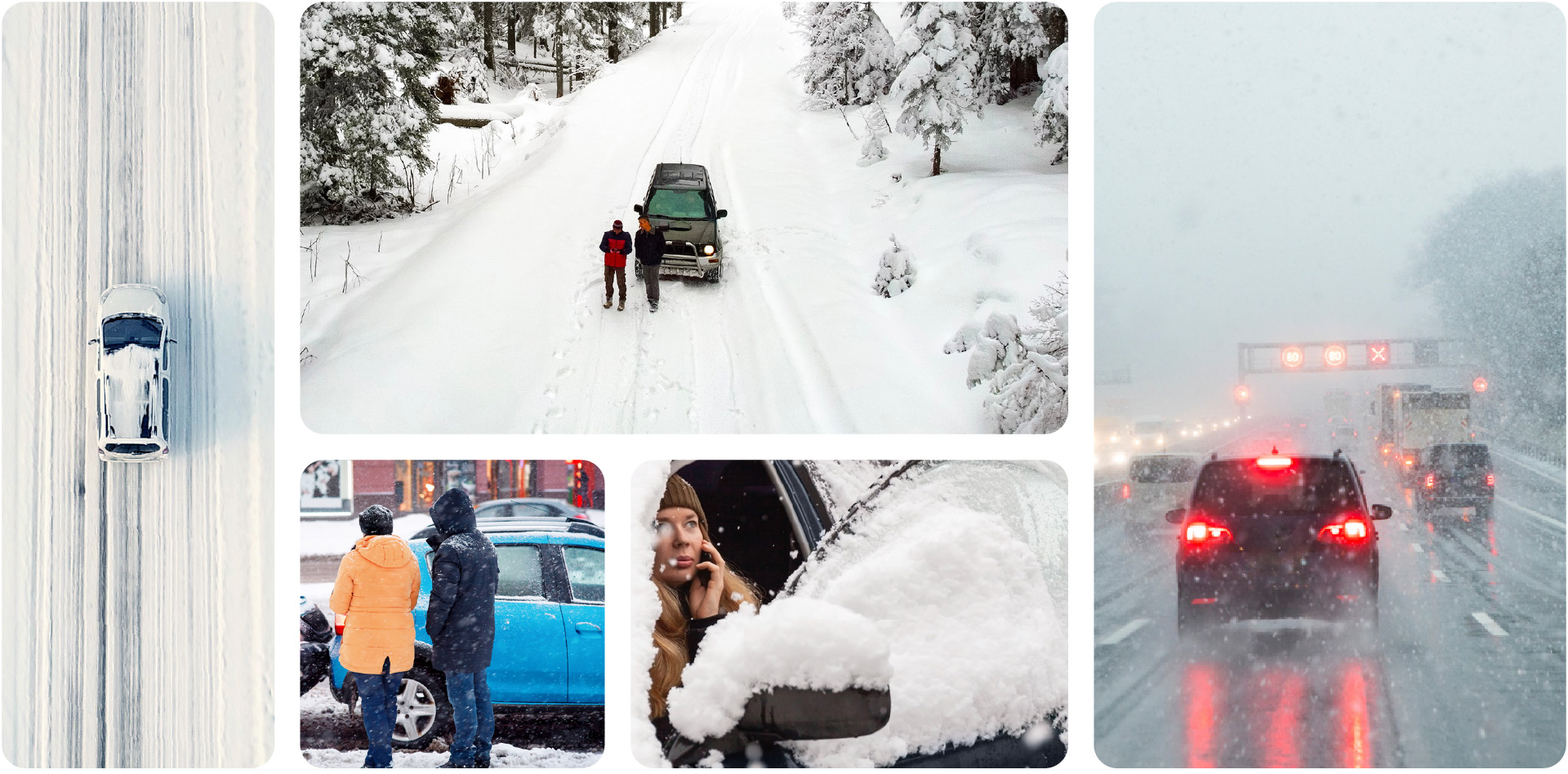
Winter brings a significant increase in driving risks that shouldn’t be underestimated:
- Increased collision risk – Studies show drivers are approximately 25% more likely to have a collision in winter. UK insurance companies report a 25% increase in accident claims during November compared to April, coinciding with shorter days, poor visibility, and icy roads.
- Battery problems – Cold temperatures cause a 50% rise in flat batteries. This happens because low temperatures slow down a battery’s chemical reactions and thicken engine oil, making it work harder to start the engine. The increased use of accessories like heaters and lights puts further strain on your battery.
- More breakdowns – A 22% increase in winter breakdowns was recorded by National Highways over the last five years. Tyre issues, loss of power, and engine problems are the top causes for winter breakdowns.
Top 10 Tips for Winter Driving
1. Sort Your Screen Wash
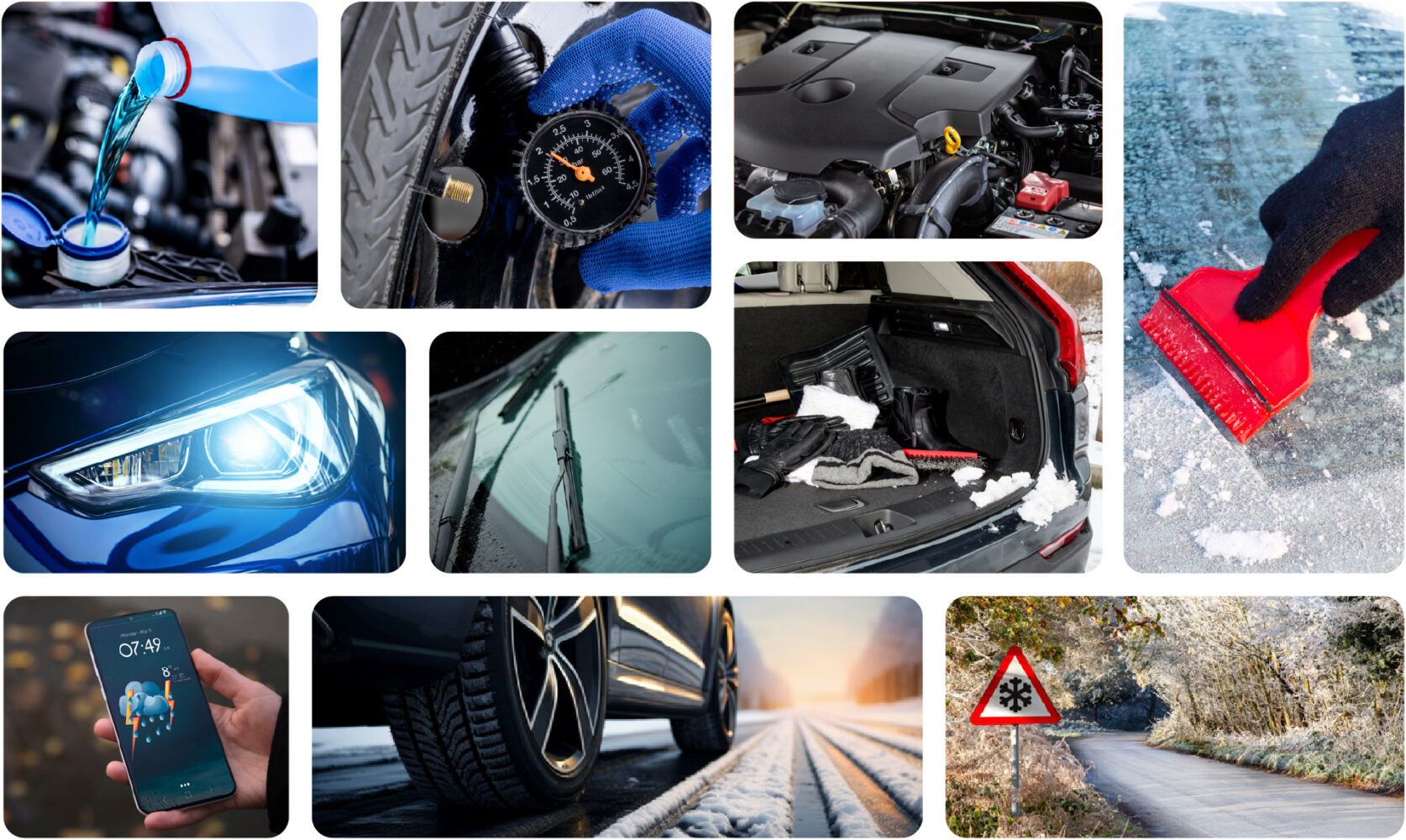
You need screen wash suitable for colder weather. Without the correct mix, the screen wash could freeze in your nozzles or even over your windscreen. Dozens of people are hurt each year in crashes involving smeary or frosted windscreens.
2. Check Your Tyres
Inspect your tyres for damage, ensure they’re at the correct pressure, and verify there’s enough tread to keep you legal and safe. Proper tyre maintenance allows you to stop your vehicle quickly in an emergency – crucial on slippery winter roads.
3. Get Under the Bonnet
A winter check under the bonnet can prevent issues further down the road. Check oil and coolant levels regularly to prevent problems that could leave you stranded in potentially dangerous conditions.
4. Inspect Your Lights
Carry out a walk-around check of your vehicle’s lights after switching them all on, including hazards and fog lights. Bulb failures are more common in winter, and proper lighting is essential for visibility in darker winter conditions.
5. Clean & Test Your Windscreen Wipers
Check windscreen wiper blades to ensure they clean the screen properly and don’t smear. There is more road grime to clear from your screen during winter, making effective wipers essential for safe driving.
6. Be Breakdown Ready
Equip your vehicle with the right winter kit (see Essential Equipment section below). Always have plenty of fuel or electric charge. Carry emergency phone numbers with you so you can quickly get help if needed.
7. Defrost Before Departing
Clear your screen and vehicle before setting off so you can see out of all windows and mirrors (it is illegal to drive with an obscured view – Highway Code Rule 229). Clear any snow from the roof, bonnet and boot so it doesn’t get blown into other traffic while driving. Important: Never try to defrost glass with hot water – it could shatter.
8. Follow the Forecast
Listen to weather warnings and consider how that might affect your journey, as you might be delayed for long periods. Always ask yourself if travel is essential in bad weather conditions.
9. Drive Defensively
Allow extra time for journeys, accelerate and brake gently, keep your distance from the vehicle in front, and adjust your speed to the driving conditions. These defensive driving techniques are even more important in winter.
10. Look Out for Warnings
Make sure you recognise warning signs, whether on the road or on your dashboard, and know what to do in response. Being prepared avoids distraction or confusion while driving.
Specific Driving Conditions
Driving in Fog
- Slow down
- Use dipped headlights
- Only use front and rear fog lights if visibility is seriously reduced
Driving in Bright Sun
- Use sunshades and sunglasses
- Slow down
- If you can’t see, pull over
Driving in Snow
- Accelerate and brake gently
- Use your vehicle’s ‘winter mode’ if available
- Leave a larger than normal gap in traffic

Essential Equipment
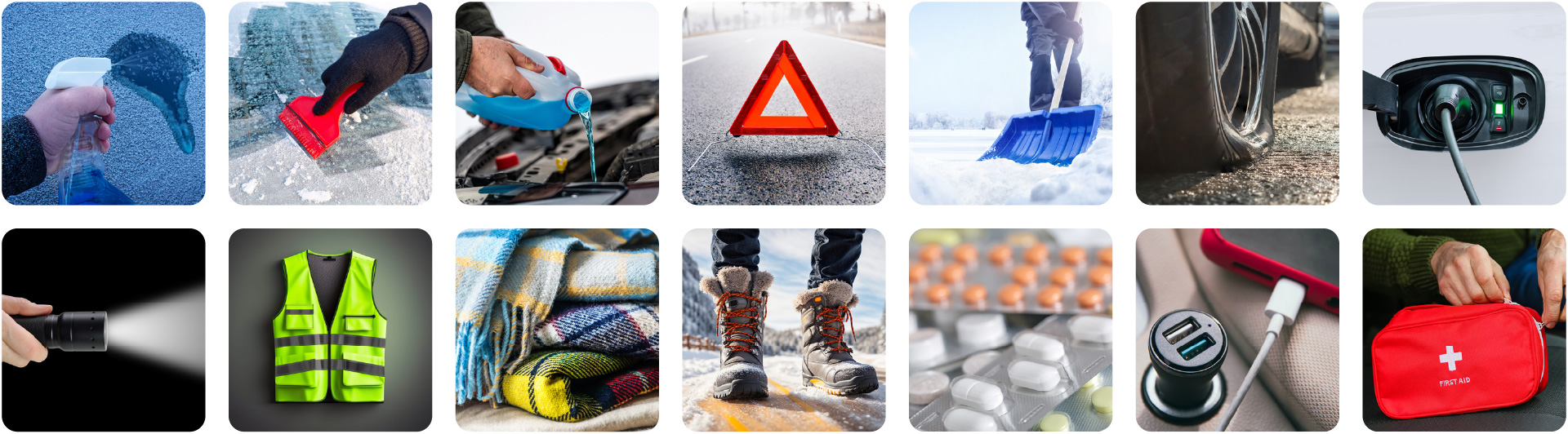
For the Vehicle
- De-icer
- Ice scraper
- Screen wash
- Warning triangle
- Shovel (in snowy weather)
- Inflation kit / spare tyre
- EV charging cables (if applicable)
For You
- Torch
- Hi-Vis jacket
- Blanket
- Sturdy footwear
- Food and drink
- Prescription medicines
- Mobile phone and charger
- First aid kit
- Winter gloves
Additional Tips for Electric Vehicle Drivers
Check Your Range
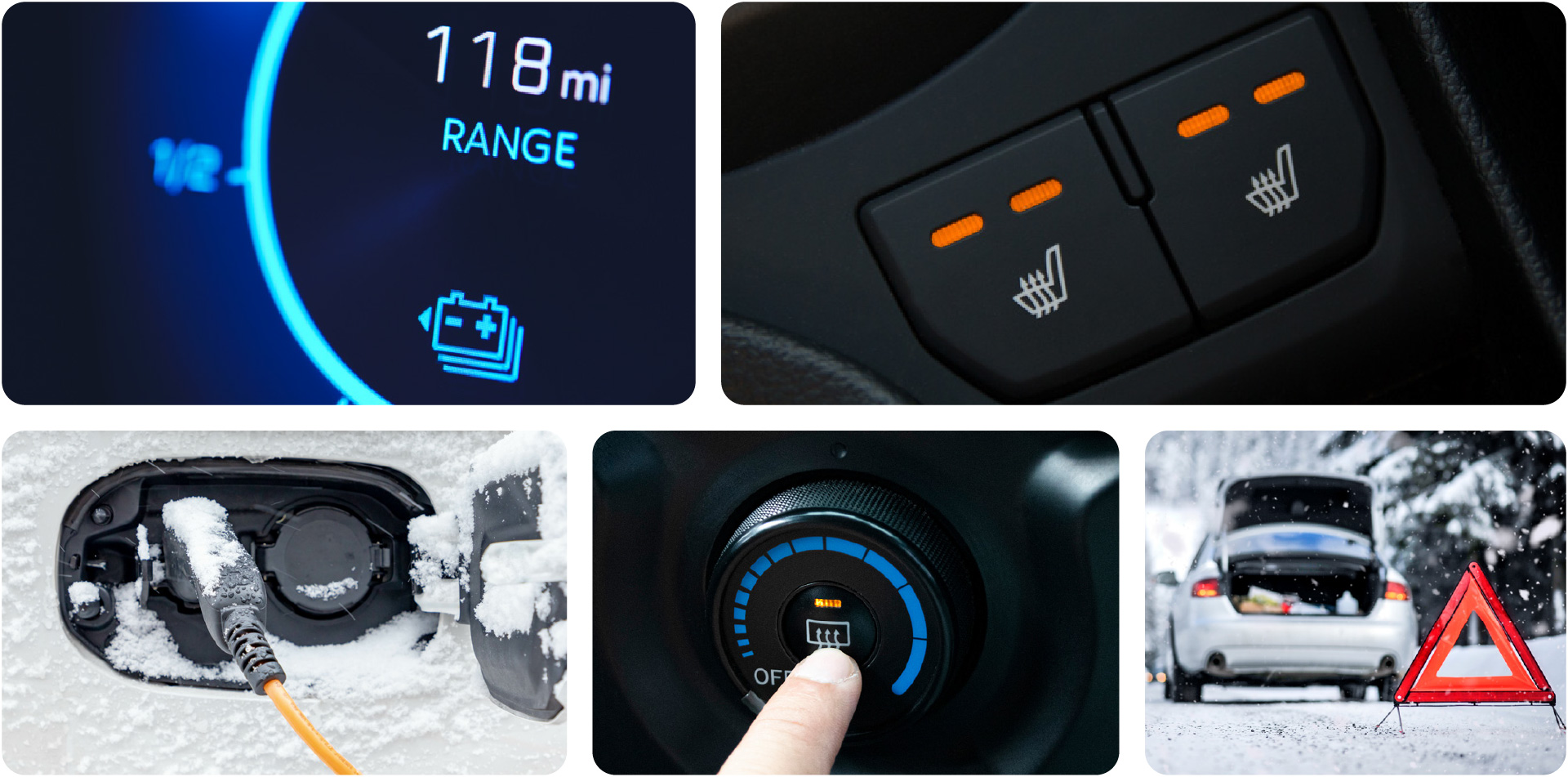
Colder weather can impact the range of electric vehicles, which could affect journeys you easily completed on a single charge in summer. Typically, an electric vehicle’s range falls 20-30% in colder weather.
Heat the Person Not the Vehicle
One of the biggest drains on an electric vehicle’s battery can be power-hungry equipment such as air conditioning and heating. Where fitted, the use of heated seats and steering wheel keeps you warm and protects range during cold weather.
Defrost Before You Unplug
Most electric vehicles have a pre-heating function, which allows you to warm the cabin and defrost windows before unplugging, so range is not lost on the road. Turn this on in the vehicle’s settings or using the vehicle’s driver app.
Plan Your Charging Stops
For longer journeys, plan your charging stops and monitor congestion at popular sites. Some locations might impose overstay fines if you park for too long, even when waiting to charge.
Staying Safe in a Breakdown
If your vehicle breaks down, the priority is to keep you and your passengers safe. While waiting for help, follow these key steps:
- Try to leave your vehicle off the road to avoid blocking traffic. Look out for soft verges that might be obscured if it is snowing.
- Switch on your hazard lights and, if safe to do so, use the warning triangle to alert traffic of your vehicle’s presence.
- Do not wait in your vehicle unless conditions demand it. You are safer away from the road, with a blanket and hi-vis clothing.
- Share your location. Road signs and smartphone apps can all help you to provide an exact location to the breakdown services.
Need More Information?
Grosvenor is here to help, with an expert team on the phone providing all the information you need to get back on the road.
Our Driver Services team is always here to help. Contact the team by phone or email:
Email: info@ifmfleet.co.uk
Phone: 01536 536 590